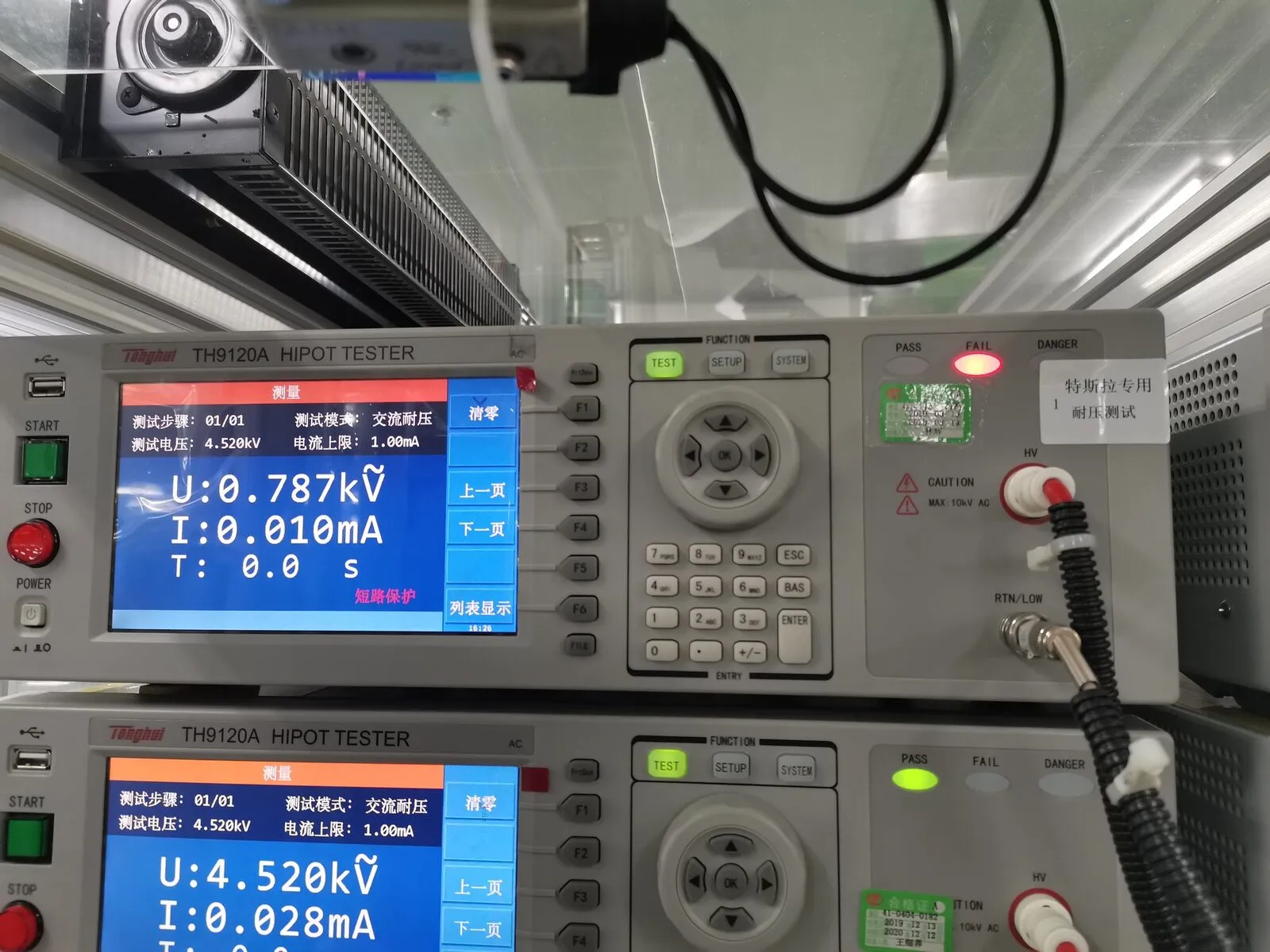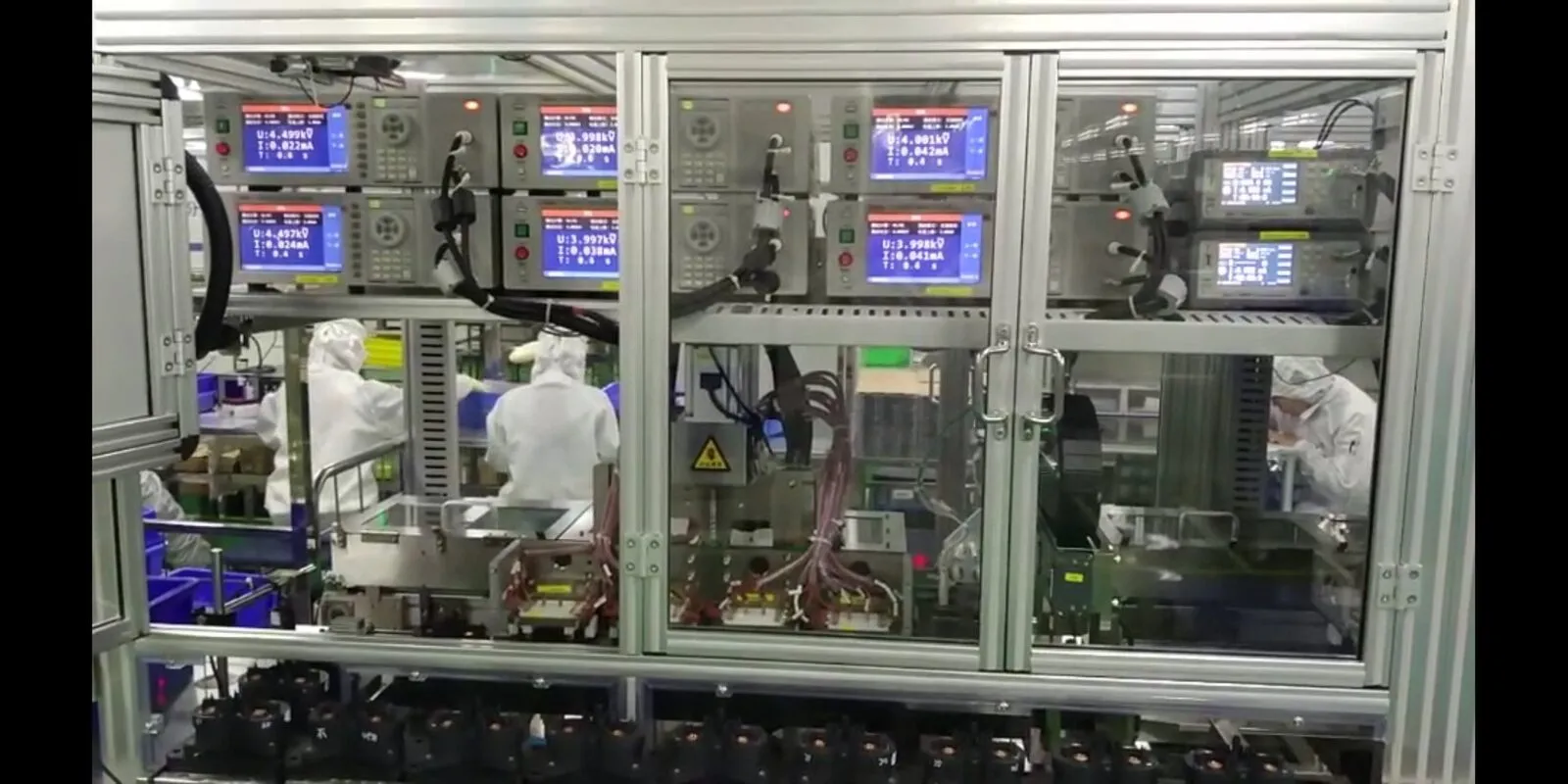
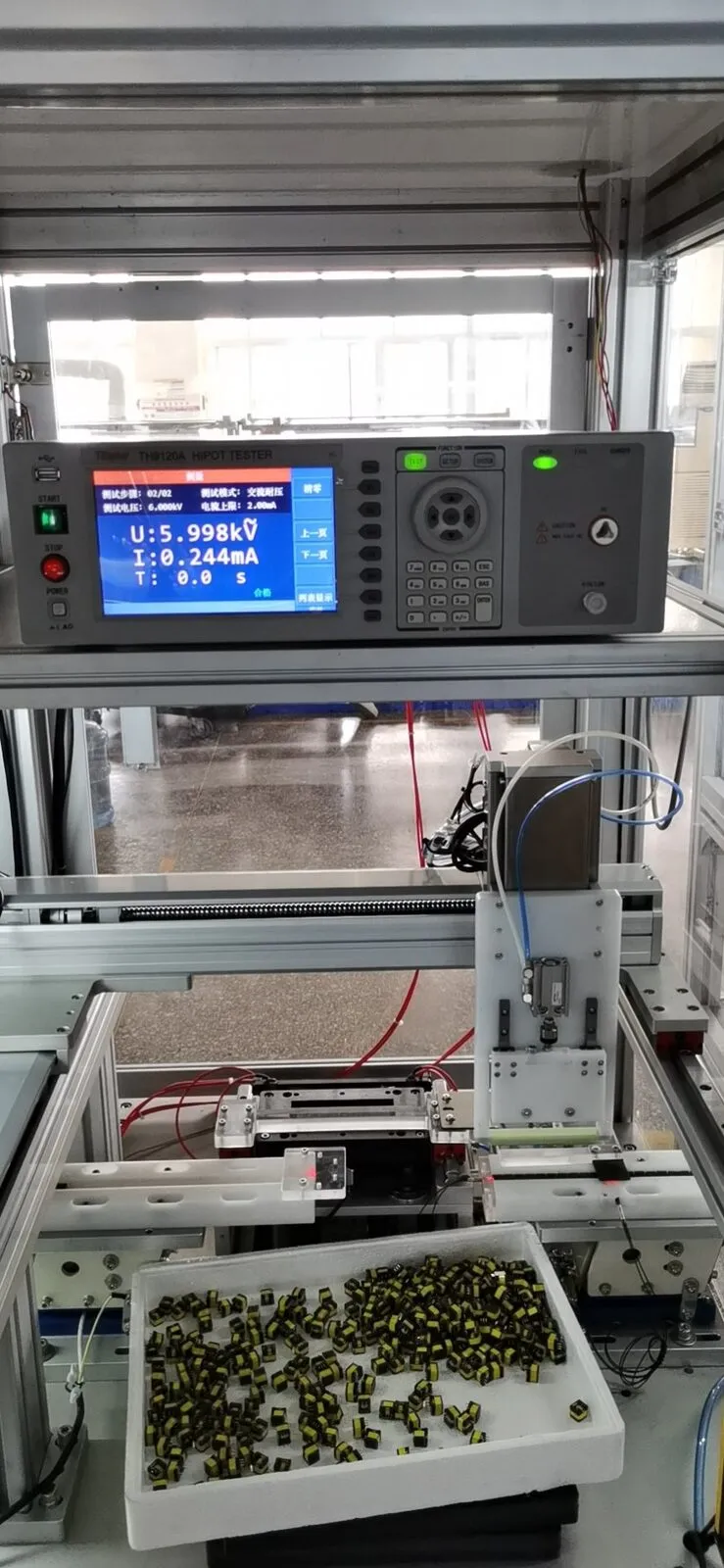
Chargers, power modules, optical modules, household appliances and wearables are produced in high volumes. Their test steps must be fast, automated and reliable, from multi-pin insulation tests on transformers to safety tests on finished appliances.
Typical test tasks
| Test task | Product | Typical test conditions | Recommended set-up |
|---|---|---|---|
| Multi-pin insulation resistance | High-frequency transformers in adapters and chargers | 50 V DC, limit > 10 MΩ; fast scanning of many pin combinations; custom test programs | TH600 series (TH615 / TH630) modular harness and cable test system |
| Laser diode bias supply | Optical communication modules | DC bias slightly above threshold current; 1 mV / 0.1 mA setting resolution; several channels | TH6412 triple-channel programmable linear DC power supply |
| Electrical safety of inverter drives | Inverters for air conditioners, refrigerators and industrial motors | AC and DC withstand voltage, insulation resistance, ground bond | TH9130 multifunction electrical safety analyzer |
| Capacitance of flexible sensors under load | Stretchable sensors for wearables and electronic skin | 100 kHz; pressure 10,000 Pa; recording over 0–1000 s | TH2838H precision LCR meter |
What to consider
- Command compatibility. If an existing test program uses another brand’s commands, check command compatibility early. It can shorten the changeover.
- Multi-pin parts. For transformers and connectors with many pins, a scanning test system avoids manual re-connection.